
.png)


DAVID WILSON
DAVID WILSON
EDUCATOR • STUDIO ARTIST • CREATIVE PLACE MAKER • CONSERVATION • RESEARCH
EDUCATOR • STUDIO ARTIST • CREATIVE PLACE MAKER • CONSERVATION • RESEARCH
EDUCATOR • STUDIO ARTIST • CREATIVE PLACE MAKER • CONSERVATION • RESEARCH
EDUCATOR • STUDIO ARTIST • CREATIVE PLACE MAKER • CONSERVATION • RESEARCH
My teaching philosophy is rooted in the conviction that the arts are both a means of personal expression and a conduit for community engagement. This perspective was shaped early in my development as an artist through direct mentorship during my undergraduate studies at Hampton University. I served as a mentee and studio assistant to Dr. John Biggers during his residency for the "House of Turtle" mural at the Hampton Library, supporting him by cleaning brushes, running errands on campus, and retrieving source material for his early studies from the archives of the Hampton University Museum. Later, during my residency with James Phillips, I contributed to the painting of the 1993 triptych mural "Gateways to The World" at the Philadelphia Airport, gaining insight into the precision, collaboration, and technical mastery required for large-scale public art. These formative experiences reinforced the essential connection between mentor and student, demonstrating how guidance, observation, and hands-on practice cultivate both skill and vision.
Craft, Context, and Community: A Teaching Philosophy
Collage
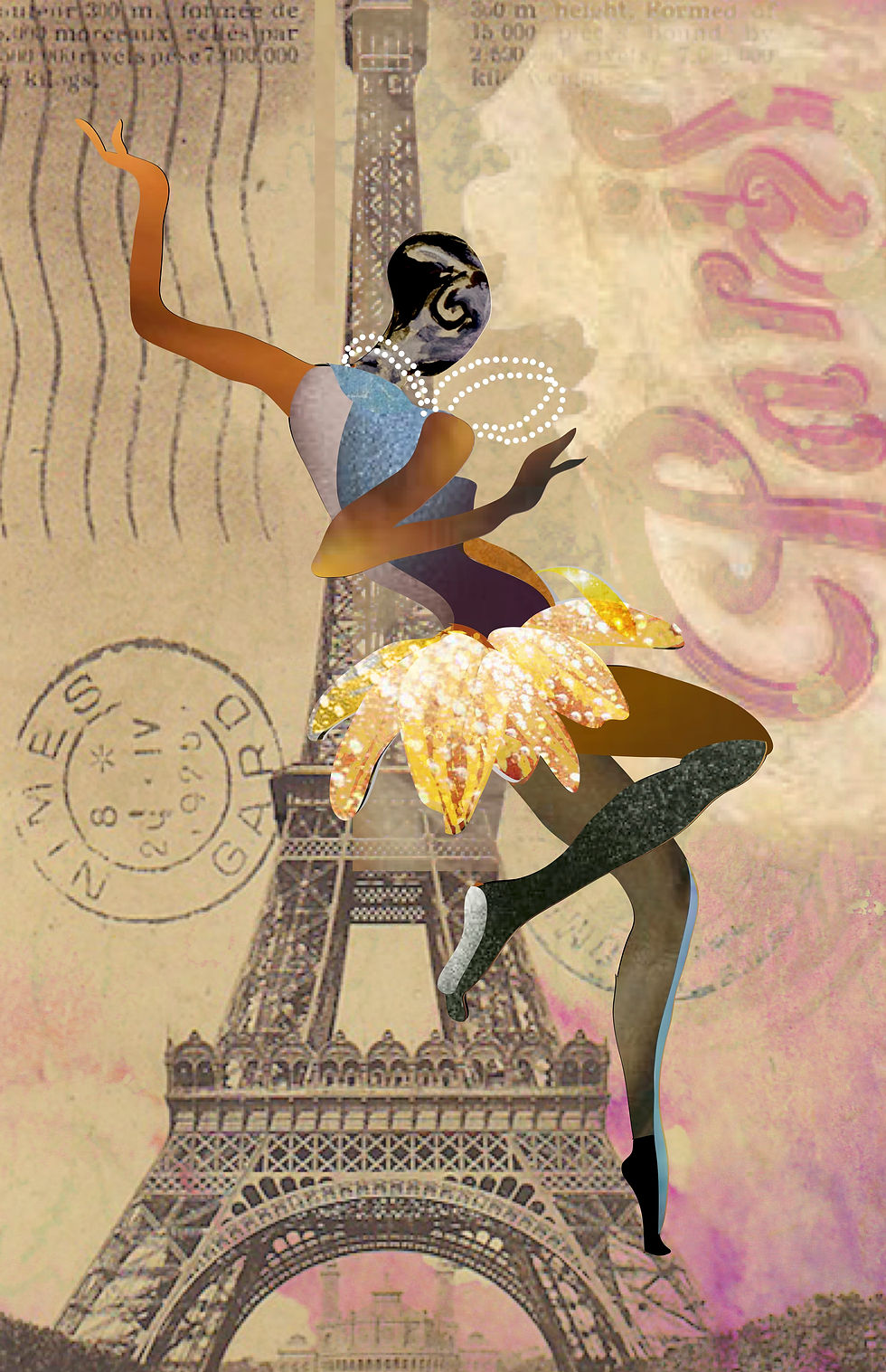


Please click the image to expand
Paintings + Sketches


Please click the image to expand
Public Art

4' x 21' Mixed Media Laminated Art Glass (Cincinnati, Ohio)

12' x 23' Laminated Art Glass Kinston Music Park (Kinston, North Carolina)

500 sqft of Hand Painted Art Glass Gantt Center for African American Arts + Culture (Charlotte, North Carolina)
4' x 21' Mixed Media Laminated Art Glass (Cincinnati, Ohio)
Please click the image to expand
Layered Material Practice: Bridging Drawing and Painting Through Mixed Media
My mixed media practice explores the intersection of drawing and painting through layered mark-making, material experimentation, and surface development. Works often begin with drawing as a structural framework, which is then expanded through painterly
processes that build atmosphere, movement, and narrative depth. Materials such as oil pastels on canvas and paper are integrated to preserve the immediacy of drawing while introducing rich color, texture, and tactile qualities. The combination of line, gesture, and
layered media allows the work to oscillate between draftsmanship and painting, creating surfaces that feel both constructed and intuitive. This balance between studio drawing practice and painterly exploration results in works that emphasize material presence,
memory, and process.

“Translating Light: Studio Practice, Monumental Glass, and the Art of Teaching”
The original glass painting for "Divergent Threads, Lucent Memories" (Gantt Center for African American Arts + Culture, Charlotte, NC) was developed in David’s North Carolina studio, where meticulous studies, sketches, and brushwork established the composition, color palette, and narrative imagery. Over the course of a two-week residency at the Franz Mayer of Munich Studio, the design was translated to an enlarged, monumental scale. This process required not only technical mastery of traditional enamel techniques and layered painting but also the ability to communicate and teach his unique approach to studio assistants unfamiliar with his personal methods. In order to achieve the precise stylistic nuances and narrative depth of the original, David instructed and collaborated directly with the Munich studio team, guiding them step-by-step to recreate his exact techniques and aesthetic choices across the full-scale glass panels.

This experience highlights his capacity for translating intimate, highly detailed studio work into large-scale public installations while simultaneously mentoring others, a direct parallel to collegiate instruction. The act of teaching the Munich studio team required breaking complex processes into clear, repeatable steps, demonstrating how technical skill, artistic intent, and conceptual narrative intersect
in practice.


These are precisely the skills David brings to an academic environment: the ability to guide students
in developing their own technical mastery, problem-solving abilities, and visual storytelling, while encouraging experimentation and translating personal vision into tangible outcomes.

From initial conception to final installation, the "Divergent Threads, Lucent Memories" art glass panels exemplified David’s dual role as creator and educator. They bridged the intimacy of studio painting with the demands of high-profile public art, producing luminous works that engage audiences with color, light, and layered imagery. By teaching others to realize his vision, he not only ensured the integrity of the work but also reinforced a methodology grounded in mentorship, observation, and hands-on guidance; skills that directly inform his approach to teaching studio courses, public art workshops, and community-engaged learning in higher education.


.jpg)
Community Participatory Instruction: "At the Intersection of Studio Art, Public Practice, and Civic Engagement"
Community Participatory Instruction is rooted in the belief that artistic knowledge extends beyond the private confines of the studio and becomes most impactful when shared through collective experiences in the public realm. It is a pedagogical approach that translates studio methodologies; research, conceptual development, material exploration, critique, iteration, and reflection; into participatory experiences that engage individuals across diverse cultures, age groups, and levels of artistic proficiency. In this model, artistic practice expands from the individual act of making into a collaborative
process of learning, dialogue, and co-creation.
.jpg)
Community participation can take many forms depending on the project, audience, and goals of engagement. Traditional methods may include workshops, community paint days, design charrettes, storytelling sessions, drawing exercises, collaborative fabrication, artist residencies, public demonstrations, and hands-on production activities that invite participants into the creative process. Within public art practice, these engagements often become integral to project development, allowing community voices, local histories, and lived experiences to directly inform the conceptual and visual
outcomes of the work. Murals, installations, and civic artworks therefore become more than finished objects; they evolve into collective narratives shaped through shared authorship and public contribution.
Participatory instruction may also occur through lecture-based and discourse-centered
formats that expand artistic engagement beyond material production. Public
presentations, artist talks, panel discussions, symposia, and platforms such as TEDx
events create opportunities to translate artistic practice into broader conversations
around culture, history, identity, design, placemaking, and community transformation.

In these environments, the artist assumes the role of educator, storyteller, and facilitator; sharing process, methodology, and lived experience while inviting audiences into critical dialogue about the social role of art. TEDx-style presentations, in particular, provide a platform for communicating how studio inquiry evolves into public
engagement, demonstrating the intersections between creative practice, mentorship, education, and civic impact. These forums encourage participants to view art not simply as an object or aesthetic outcome, but as a catalyst for discourse and
social connection.
.jpg)
Community Participatory Instruction also serves as a framework for mentorship and workforce development. Emerging artists, students, and community participants gain exposure to professional processes including design development, image scaling, mural transfer methods, fabrication techniques, installation logistics, material systems, and collaborative workflows associated with large-scale public art practice.
These experiences bridge classroom learning with applied practice while demystifying the realities of professional
artistic production.

At the intersection of studio art and public practice, Community Participatory Instruction positions art as both process and platform. Whether through hands-on workshops, collaborative mural production, public lectures, community forums, or TEDx presentations, it transforms artistic practice into a shared educational experience that builds relationships, encourages cultural exchange, and creates meaningful connections between people, place, and creative expression.
Through this convergence, the artist becomes both maker and facilitator, extending the language of the studio into the public realm as a vehicle for engagement, learning, and
collective transformation.